



The Niger State Ministry of Health has convened a two-day Health Sector External Retreat for partners, staff, and key stakeholders to validate reform priorities, align partner interventions, and strengthen coordination under the New Niger Health Agenda.
The retreat, supported by UNICEF, brings together government institutions, development partners, NGOs, CSOs, and legislative actors to harmonize planning, financing, and accountability across the health sector.
The retreat aims to present and validate outcomes from the recent Internal Health Sector Retreat, orient stakeholders on strategic priorities and reform pillars, strengthen the use of the Sector-Wide Approach (SWAp), and develop a harmonized, costed implementation plan aligned with the Medium-Term Sector Strategy (MTSS) and Annual Operational Plans (AOPs).
Participants are also expected to agree on a shared monitoring, reporting, and accountability framework to drive performance and results.
Declaring the retreat open, the Head of Service, Abubakar Sadiq—who delivered the opening address on behalf of Governor Mohammed Umaru Bago reaffirmed the state government’s commitment to implementing its health sector agenda through stronger systems, improved coordination, and sustainable financing.
He assured partners of the government’s resolve to meet its financial, political, and institutional obligations, noting ongoing reforms to align the Ministry of Primary Health Care with planning, budgeting, and fiscal institutions to improve efficiency and integration.
He also highlighted legislative reviews to modernize health laws, innovative approaches to addressing human resources gaps including structured engagement of retired professionals and improved welfare for health workers. He announced the establishment of the Niger State Registration and Regulatory Agency for Private Health Care Facilities to strengthen oversight and quality assurance across the public and private sectors.
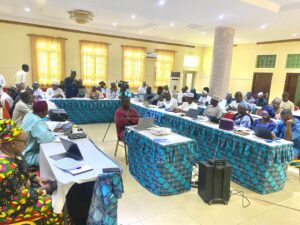
In his remarks, the Honourable Commissioner for Health, Dr. Murtala Babagana, emphasized inclusiveness, coordination, and execution as guiding principles of the Ministry’s reforms. He acknowledged the leadership of Governor Bago and the support of the House Committee on Health, noting visible improvements in service delivery across facilities. The Commissioner underscored the retreat’s alignment with the long-term Blue Niger Agenda and described recent internal reforms, including a comprehensive self-assessment of sector performance and priorities.
Dr. Babagana also highlighted ongoing collaboration with national and international partners, including the National Health Survey (NHSS), a five-year assessment conducted with the Federal Ministry of Health and funded by USAID, with strong support from UNICEF and other partners. He said the data will guide evidence-based planning and investment decisions, while reinforcing transparency and accountability.
The Chairman, House Committee on Health, Hon. Nasiru Umar, commended the Commissioner and his team for visible progress but raised concerns about gaps in inclusion, particularly women’s representation. He urged greater local ownership in partner and NGO interventions, stressing sustainability and accountability. He also called for improved staff motivation, attention to retirement age for health professionals to retain expertise, and stronger regulation of private health and training institutions.
Speaking on behalf of partners, the Officer-in-Charge of UNICEF Kaduna Field Office, Dr. Idris Baba, commended the Ministry for convening the retreat and for its foresight in establishing a structured reform and coordination process. He reaffirmed UNICEF’s commitment to supporting state-led priorities, emphasizing that partners would provide technical input and support while allowing the government to lead implementation and own the outcomes.
By the end of the retreat, stakeholders are expected to endorse a validated Communiqué and reform priorities, agree on clear roles and coordination mechanisms across MDAs, LGAs, and partners, adopt a costed and harmonized implementation plan aligned with MTSS and AOPs, and renew commitments in support of the Presidential Health Sector Renewal Initiative.